Have you read much by Francis Bacon?
In truth, that’s a question I have never been asked. I think his is a name a lot of people are familiar with, and if pressed as to who he was, the answers might range from philosopher to scientist to writer to statesman. All are true; he was also a lawyer.
Francis Bacon’s most well-known contributions were in the realm of science; he was one of the early promoters of the idea of gaining scientific knowledge through careful observation of the natural world.
In his writings, Bacon established the idea of scientific inquiry as the means to gain knowledge of the world around us; some called him the father of empiricism.
Francis Bacon started writing and publishing his essays around 1597. If you go look for a book of his, likely the one you’ll find is Bacon’s Essays, a collection of 58 essays starting with “Of Truth” and ending with “Of Vicissitude of Things” and ranging all kinds of topics in between:
- Of Ambition
- Of Followers and Friends (possibly a good one for our social media and “influencer” era)
- Of Delays
- Of Cunning
- and 50 or so more
I’m starting a new creative writing project this month. I am going to be creating a series of erasure poetry from these essays by Francis Bacon.
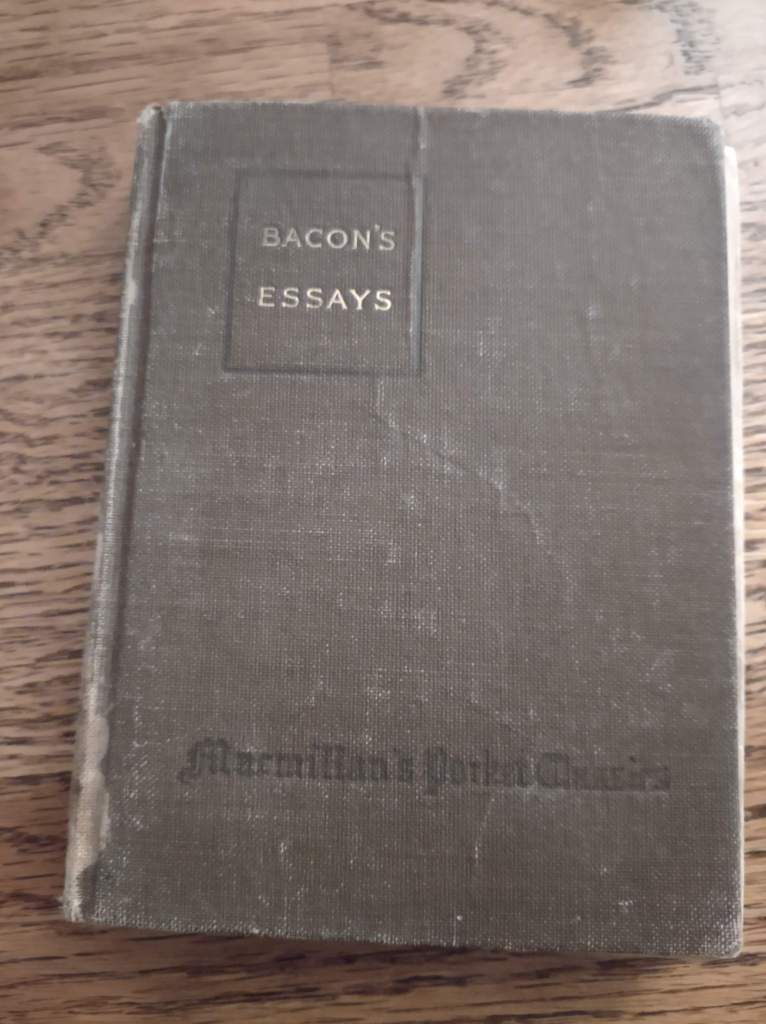
The book I’m working with is over 100 years old, but it’s easy to find copies of his works, and this book isn’t in the best shape with its binding falling apart (otherwise I’d feel guilty about marking it up with erasure poetry/blackout poetry).
I’ll be sharing more about this project regularly on my Substack publication, Limning the Ordinary.
And you’ll be able to see posts of the erasure poetry images if you follow me on Instagram.
My short intro video to the project is below:
Here, though, on my blog, I wanted to post Francis Bacon’s full essays, as an easy and helpful reference point. As I mentioned above, his essays were first published over 400 years ago, so it’s kind of like reading the King James Version of the Bible — some words and phrases and terminology are not the most accessible.
So, in addition to the original version of Francis Bacon’s essays, I’ll be offering a rephrased version. It’s my rendering, so forgive me if my interpretations on some of his works aren’t exactly the way you read them.
My hope is that it will make Bacon’s work a little more accessible. If nothing else, it’s a helpful practice for me as I familiarize myself with the essays and then go about creating erasure poetry with it.
Here is the first rewritten essay. And at the end of this post, you’ll find the original. Feel free to compare the two, and if you have any thoughts, insights, or suggestions (and corrections), I’d be pleased to hear them.
I also wrote another version that goes beyond a modern rendering of Bacon’s words on Substack; it’s how I would put his points if I were writing them in my “style” or voice.
Of Truth – A Modern Rendering
Truth in Philosophy and Theology
“What is truth?” That was the question Pilate asked Jesus, though not seriously, not waiting for a response. He walked away instead.
There are people who enjoy a constant change of thought, people who don’t want to fix their belief system on any one thing. Their goal is free will, not only in thought but in action.
Although the group of philosophers that followed that train of thought—the Grecian school of skeptics—is no longer around, we still see discussions by people who follow that same vein of thinking (although it’s obvious their blood doesn’t run as thickly as that of the ancient philosophers).
The question at hand is this:
Why do men love lies?
Is it because of the hard work of finding out the answer to that age-old question: What is truth? Or is it because of the responsibilities that truth imposes upon us once we’ve discovered what truth is?
It is this, yet more. Some part of our natural hearts—our desires—simply love lies.
Lucian, from one of the later Grecian schools, considered this matter. He considered what it might be in lies that makes them attractive to mankind—when they are not weaving imagination for pleasure like poets do, or creating tall tales for advantage like a marketer might do, but simply telling lies for their own sake.
I don’t have the answer … except to say that truth is like naked and open daylight. It is standing before someone without wearing a mask, without the successes and wrappings that we showcase to the world. It is realizing that what we have to offer is as fleeting as the light of a candle.
Truth is like a pearl, which shows its beauty best by the light of day. Unfortunately, it seems that truth will never be valued like a diamond or carbuncle, which takes in that light and casts it in a variety of ways.
And, of course, mixing a lie into truth does add fun, does it not?
Think what people would be like if anything but solid truth were taken out of our minds and we were left without opinions—vain though they may be—without flattering hopes, false assumptions, and all the imaginations that we want to create. This would leave the minds of so many people small, shrunken things, full of melancholy and sorrow.
Augustine, in his Confessions, was severe when he called poetry “the wine of demons” because it fills the imagination, yet it only does so with the shadow of a lie.
It is not the kind of “lie” that passes through the mind—such as poetry or imagination—that hurts people. It is the lie that sinks in and settles there, the kind that a person doesn’t realize is even present until it is too late.
These are the things that cause men to make false judgments and have depraved affections; these matters reveal themselves in the heart of such a person.
In other words, truth only judges itself.
Seeking after truth is like courtship, wooing a thing that is desirable. The knowledge of truth is like marriage. Resting in the belief of truth is kind of like having your cake and eating it, too. It is being able to enjoy that marriage of mind with truth. This is the sovereign good of human nature.
When God created his varied works, his first creation was physical light—the light of the senses. His last creation was the light of reason—which he gave to men and women created in His image. His sabbath work since then has been the illumination of his Spirit.
First, he breathed light upon the chaos. Then he breathed light into the face of mankind. Still, to this day, he breathes and inspires light into the face of his chosen ones.
Lucretius (the poet who was quite possibly the best part of the Epicurean sect) made this comment about truth:
It is a pleasure to stand upon the shore
and to see ships tossed upon the sea,
a pleasure to stand in the window of the castle
and see battle and the adventures thereof below:
but no pleasure is comparable to standing upon
a vantage ground of truth, a hill that cannot
be overtaken by enemies and where the air
is always clear and serene so that it is easy
to see the errors and wanderings, the mists
and storms, in the veil below.
Considering these words, it is important to remember that if we stand upon that hill of truth, we should not look down upon others wandering in the valley with pride in our hearts. It is only a touch of heaven on earth, only the grace of God that a person’s mind might move with love, rest in faith and trust, and rotate with its North star being truth itself.
Truth in Civil Matters
Up to this point, we’ve talked about theological and philosophical truth, but let’s talk about the truth of civil business.
Even those who don’t adhere to honest practices would admit that straightforward and plain dealings show the honor of a person’s nature. Someone mixing lies and falsehoods into their dealings is akin to mixing less valuable metals into gold and silver coins. It may make the metal work stronger or more durable, but it makes the coin itself less valuable.
People who go by winding and crooked courses or paths are like serpents who travel down low upon their bellies and cannot walk with two feet as men do. If we are men, should we not be standing like them rather than travelling close to the ground?
There is no vice that covers a man with shame so much as to be found false and perfidious. Montaigne spoke of this when he considered why a person speaking lies should be in disgrace and why calling someone out as a liar is such a strong charge. This is what he said:
“It stands to reason that a man who lies is brave toward God and a coward toward men.”
In other words, a lie faces God and shrinks away from mankind.
A person who deals in falsehood and breaches the faith of men is not only dealing with other men. Other people might be negatively affected by their lives and falsities, but the final judgment belongs to God. When the last trump sounds, He will look upon the generations of men. As it was foretold by Christ: When he returns, will he find faith upon the earth?
Original Version of “Of Truth” by Francis Bacon
Here is the original version of his first essay in the collection. I have not broken down the paragraphs (which is really hard for me, as the original essay is only two paragraphs):
Of Truth by Francis Bacon
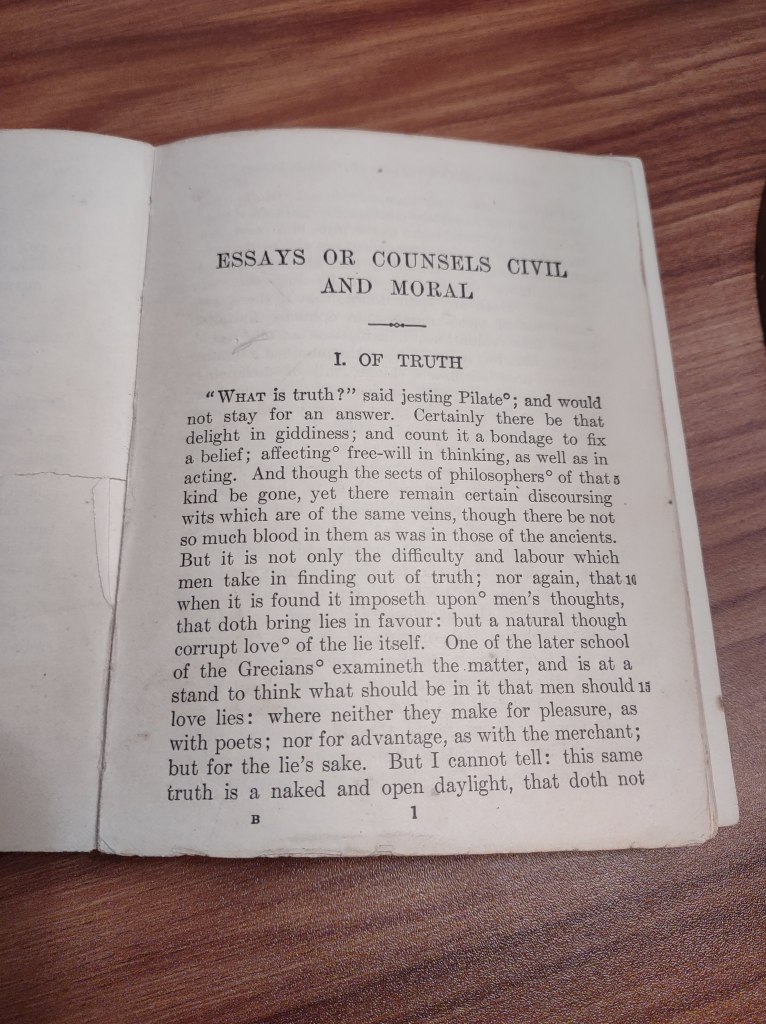
“What is truth?” said jesting Pilate, and would not stay for an answer. Certainly, there be that delight in giddiness, and count it a bondage to fix a belief, affecting free-will in thinking as well as in acting. And though the sects of philosophers of that kind be gone, yet there remain certain discoursing wits which are of the same veins, though there be not so much blood in them as was in those of the ancients. But it is not only the difficulty and labor which men take in finding out of truth, nor again that when it is found it imposeth upon men’s thoughts, that doth bring lies in favor, but a natural though corrupt love of the lie itself. One of the later school of the Grecians examineth the matter, and is at a stand to think what should be in it, that men should love lies where neither they make for pleasure, as with poets, nor for advantage, as with the merchant; but for the lie’s sake. But I cannot tell: this same truth is a naked and open daylight that doth not show the masques and mummeries and triumphs of the world half so stately and daintily as candle-lights. Truth may perhaps come to the price of a pearl that showeth best by day; but it will not rise to the price of a diamond or carbuncle, that showeth best in varied lights. A mixture of a lie doth ever add pleasure. Doth any man doubt that if there were taken out of men’s minds vain opinions, flattering hopes, false valuations, imaginations as one would, and the like, but it would leave the minds of a number of men poor shrunken things, full of melancholy and indisposition, and unpleasing to themselves? One of the fathers, in great severity, called poesy vinum daemonum [the wine of devils] because it filleth the imagination, and yet it is but with the shadow of a lie. But it is not the lie that passeth through the mind, but the lie that sinketh in and settleth in it that doth the hurt, such as we spake of before. But howsoever these things are thus in men’s depraved judgments and affections, yet truth, which only doth judge itself, teacheth that the inquiry of truth, which is the love-making or wooing of it; the knowledge of truth, which is the presence of it; and the belief of truth, which is the enjoying of it, is the sovereign good of human nature. The first creature of God in the works of the days was the light of the sense; the last was the light of reason; and his Sabbath work ever since is the illumination of his spirit. First he breathed light upon the face of the matter, or chaos; then he breathed light into the face of man; and still he breatheth and inspireth light into the face of his chosen. The poet that beautified the sect that was otherwise inferior to the rest, saith yet excellently well, “It is a pleasure to stand upon the shore, and to see ships tossed upon the sea; a pleasure to stand in the window of a castle, and to see a battle and the adventures thereof below; but no pleasure is comparable to the standing upon the vantage ground of truth (a hill not to be commanded, and where the air is always clear and serene), and to see the errors and wanderings and mists and tempests in the vale below”*; so always that this prospect be with pity, and not with swelling or pride. Certainly it is heaven upon earth to have a man’s mind move in charity, rest in providence, and turn upon the poles of truth.
To pass from theological and philosophical truth to the truth of civil business: it will be acknowledged, even by those that practice it not, that clear and round dealing is the honor of man’s nature, and that mixture of falsehood is like alloy in coin of gold and silver, which may make the metal work the better, but it embaseth it. For these winding and crooked courses are the goings of the serpent, which goeth basely upon the belly and not upon the feet. There is no vice that doth so cover a man with shame as to be found false and perfidious; and therefore Montaigne saith prettily, when he inquired the reason why the word of the lie should be such a disgrace and such an odious charge. Saith he, “If it be well weighed, to say that a man lieth, is as much as to say that he is brave towards God, and a coward towards man.” For a lie faces God, and shrinks from man. Surely the wickedness of falsehood and breach of faith cannot possibly be so highly expressed as in that it shall be the last peal to call the judgments of God upon the generations of men: it being foretold that when Christ cometh, “He shall not find faith upon the earth.”
Francis Bacon

